
I've put together a few helpful tips for getting the best wedding images. While much of this responsibility falls on the photographer you hire, there are a few things you can do that will impact the quality of your photographs. I've come up with these tips over the course of the 5+ years I've been shooting weddings. Since it is wedding planning season, I thought it would be worthwhile to talk about each of these tips in detail :)
Today I'm going to discuss tip #1: Plan out the timing of your wedding thoughtfully.
This tip encompasses a lot of factors that will greatly impact the quality of your photography AND your experience as the bride and groom on the wedding day. The choices you make about the timing of your wedding day will impact the amount of stress you deal with, the extent to which you have the opportunity to connect with one another and the quality of your photographs--specifically as it relates to good lighting and the quantity of relaxed portraits that are able to be captured.
Whenever I sit down with potential clients to talk about their weddings, I like to get around to discussing the timing of their wedding with them. I want to make sure they are as prepared and educated with their options as they can be in order to make informed decisions that will be best for them. I oftentimes start out by asking them if they have their hearts set on not seeing each other until the ceremony. Traditionally, the groom waits to see his bride on the wedding day until she is walking down the aisle. This tradition originated with arranged marriages. When a couple was chosen for one another they were not allowed to see each other until the ceremony so that they wouldn't have the chance to back out once they saw what each other looked like. Even though today, couples marry for love, some still like to uphold this tradition. I would say about 25% of the weddings I shoot, the bride and groom wait to see each other until the ceremony. But the trend is moving in the direction of spending more time together on your wedding day which means seeing each other before the ceremony. I really believe this is the best option for a number of reasons:
1. You get a chance to connect with one another before the craziness of the day takes over.
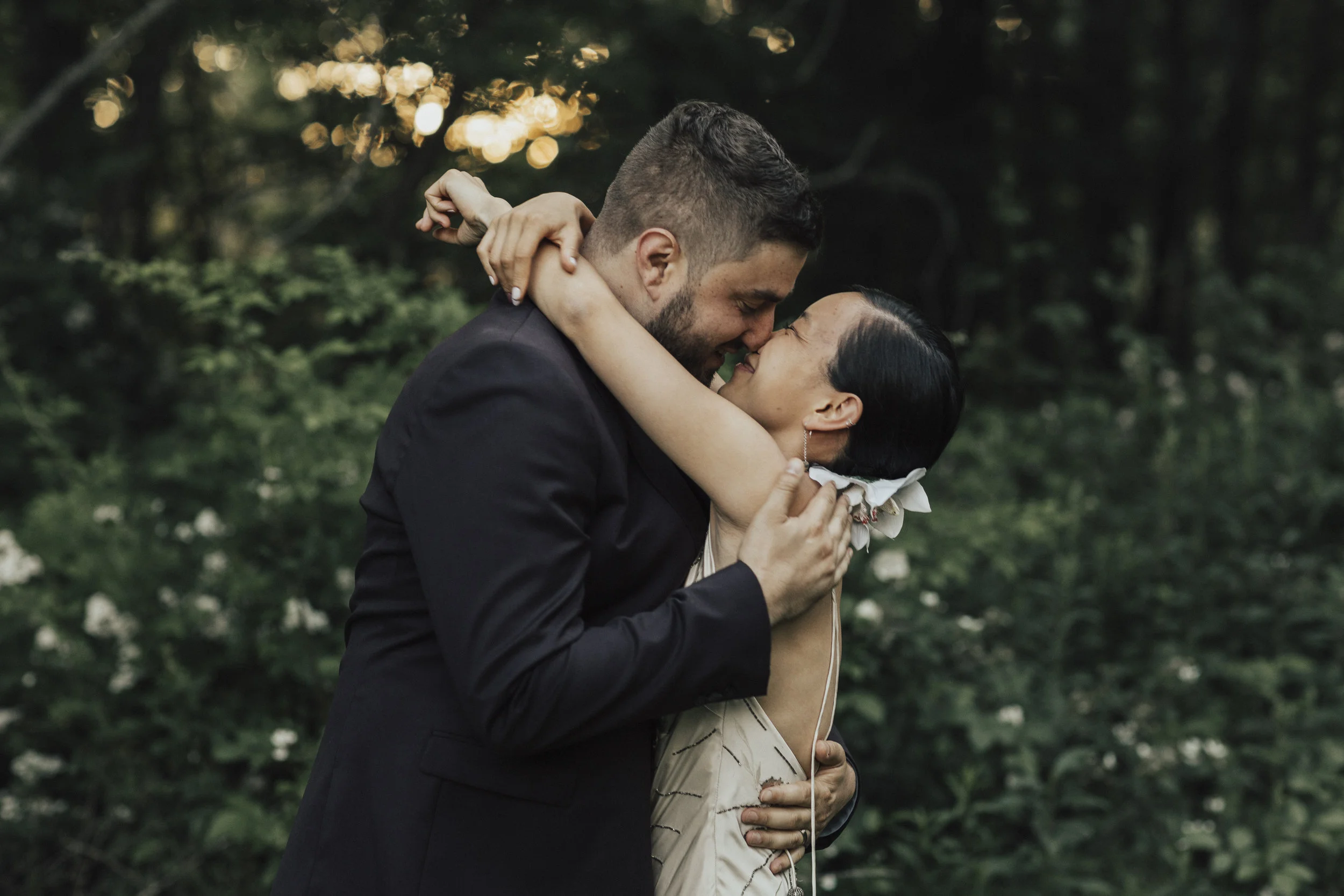
If you don't see each other until the ceremony, you likely won't get a chance to talk with the most important person in your life on your wedding day. You see each other during the ceremony, say your vows, then are swept away by the joy and love of your family and friends for the remainder of the day. If you see each other before the ceremony, you are able to have a private moment where you see each other for the first time while you are alone. You are able to react to one another verbally and much more openly because you aren't standing in front of everyone you know. I absolutely LOVE this part of the day when couples first see each other before the ceremony. I am able to capture some amazing emotions as the couple sees each other for the first time and then we walk around the property shooting portraits of the two of them. Here's some examples of some of the emotions that can be captured when you take this route:
2. Your stress and anxiety are dissolved before the ceremony.
I've observed over 100 couples throughout the course of their wedding days and for the most part they all experience some type of anxiety as they prepare in the morning. All of their months of planning have led up to this most important day. The couples who see each other before the ceremony are anxious, but as soon as they see their best friend--get a chance to hug and talk and connect--any stress that they were experiencing completely dissolves. From that point on in the day, they are completely themselves and at ease. This is something I've seen happen time and time again and I want it for each of my couples.
3. Portraits can be as quick and painless as possible.
If you see each other before your ceremony, we can get all of your formal portraits out of the way before the ceremony so that you are free to do what you and all your guests really want to do after the ceremony--celebrate and enjoy your cocktail hour/reception. Consider these two options.
Portrait schedule if you see each other before your ceremony:
3 hours before ceremony: Bride & Groom see each other for the first time & take portraits alone together
1.5 hours before ceremony: Portraits with bridal party
1 hour before ceremony: Portraits with families
0.25 hour before ceremony: Completely done with portraits as your guests begin to arrive--giving you time to go inside & freshen up.
Portrait schedule if you don't see each other before your ceremony:
2 hours before ceremony: Portraits of Bride with bridesmaids
1.25 hour before ceremony: Portraits of Groom with groomsmen
0.25 hour before ceremony: Temporarily done with portraits as your guests begin to arrive--giving you time to go inside & freshen up.
(with receiving line after ceremony)
30 min. after ceremony: Portraits with families
1 hour after ceremony: Portraits with bridal party
1.5 hours after ceremony: Portraits of Bride & Groom alone
2 hours after ceremony: Completely done with portraits
(if Bride & Groom walk down aisle and just keep walking to a secluded area)
Immediately after ceremony: Portraits of Bride & Groom alone
30 min. after ceremony: Portraits with families
1 hour after ceremony: Portraits of bridal party
1.5 hours after ceremony: Completely done with portraits
As you can see, portraits can be taken care of before the ceremony in 2 hours. If you don't see each other before the ceremony, portrait time will take up 2.5 hours of your day. In addition to the quantity of time being extended, the stress is also heightened when portraits are held off until after the ceremony. Gathering people before the ceremony is easily done through good communication before the wedding day. There are no additional guests present to work around. After the ceremony, everyone just wants to love on you and congratulate you and get to the bar. So many times during portraits after the ceremony, no one can find uncle Bob. More time is wasted gathering people and I have a difficult time getting everyone's attention to accomplish the task at hand. It's just more stressful on everyone.
4. You can plan your wedding near sunset.
So many brides and grooms want a sunset wedding. But natural light is vital for quality portraits. If you take care of all of the portraits before the ceremony, you have the flexibility to plan your wedding near sunset. No natural light is needed after the ceremony. If you wait to see each other, that's o.k., just plan your wedding earlier in the day so that there is at least 2 hours of daylight post-ceremony for your portraits.
These are the ways in which the timing of your wedding greatly affects your photography. But photography aside, I really believe that these factors also affect your stress level and general enjoyment of the day. When I talk with brides and grooms about the options, I'm really keeping their best interests in mind.
One other tip as it relates to the timing of your day and your stress level, is to plan in extra time between different events of your day as there are always unexpected things that come up. Getting dressed on your wedding day will take you longer than it does on any other day of your life. Girls tend to underestimate how long it will take and sometimes guys are the most guilty of this. Planning in more time than you think you will need will help everything run smoothly.
Feel free to leave a comment to weigh in on this discussion and stay tuned for blog posts on my other 3 tips for getting the best wedding images in the coming weeks!